


Losing an Excel file can be stressful, especially when it contains critical work data, financial records, or business reports. Files may be deleted accidentally, overwritten, lost after emptying the Recycle Bin, or closed without saving. In some cases, system crashes, virus attacks, or corrupted storage devices are responsible. The good news is that Excel file recovery is often possible as long as the data hasn’t been overwritten. Acting quickly and choosing the right recovery method is key. This guide explains how to recover deleted Excel files in Windows 10/11 using six proven and practical methods.
Part 1: How to Find and Restore Deleted Excel Files Fast?
If your Excel file disappeared recently, quick action can save you a lot of stress. The following methods work best when the file hasn’t been permanently deleted yet.
Method 1: Use Undo Delete
If you deleted an Excel file moments ago, this is the fastest and easiest fix. When a file is deleted from a folder, Windows allows you to undo the action, as long as no other operation (like copying or renaming files) was performed afterward.
Steps:
1. Open the folder where you saved the Excel file.
2. Press Ctrl + Z on your keyboard.
3. The deleted Excel file should instantly reappear in the folder.

This method works best immediately after deletion. Once other actions are performed, Undo may no longer work.
Method 2: Restore Deleted Excel File from Recycle Bin
When you delete an Excel file normally, Windows sends it to the Recycle Bin rather than deleting it. This is one of the simplest methods for retrieving files that Excel users often overlook.
Steps:
1. Double-click the “Recycle Bin” icon on the desktop.
2. Search the search box with .xlsx or .xls to locate Excel files.
3. After its location, right-click on the file and choose Restore.

Windows temporarily stores deleted files, making it easy to restore deleted Excel files before permanent removal. This is one of the most reliable answers to how to recover a deleted Excel file.
Method 3: How to Find Deleted Excel Files via OneDrive/Cloud Backup
If your Excel files were stored in OneDrive, recovery becomes much easier. Microsoft Excel integrates deeply with OneDrive, allowing file version history and cloud recycle bins. For Excel files stored in cloud services like OneDrive, recovery options are even more robust:
1. Sign in to OneDrive with your Microsoft account.
2. Check the “Recent” files section first to see if your deleted file appears there.
3. If not visible in Recent files, look for the “Recycle Bin” option in the left sidebar.

4. Locate your Excel file, select it, and choose “Restore.”

Furthermore, OneDrive offers version history functionality for recovering previous versions. To access this feature:
● Locate the file (if not completely deleted)
● Right-click on it and select “Version History.”

● Choose the version you wish to restore.
● Click “Restore”

For Microsoft 365 users, AutoSave provides extra protection. Files synced to OneDrive or SharePoint can often be recovered even after they disappear locally. Deleted cloud files are typically stored for 30–93 days, depending on your account type.
Part 2: How To Recover Permanently Deleted Excel Files?
If you used Shift + Delete or emptied the Recycle Bin, the file may seem permanently gone. However, the data often still exists on the drive until it’s overwritten.
- Method 1: Use Professional Recovery Software – RecoverGo
- Method 2: Restore via Windows File History – Previous Versions
- Method 3: Recover Files in Excel using Windows File Recovery – CMD Tool
Method 1: Use Professional Recovery Software – RecoverGo
When Excel files are permanently deleted such as by using Shift + Delete, emptying the Recycle Bin, or formatting a drive, normal recovery methods usually stop working. However, the data is not deleted instantly. The deleted Excel files will be left on the drive till they are overwritten by new data.
These hidden files can be recovered using professional data recovery software. iToolab RecoverGo Windows Data Recovery is one such effective tool. This tool is used to scan the storage device to locate lost Excel files and recover them. It can also be used to recover permanently deleted Excel files that can not be restored using Windows tools.
Key Features of RecoverGo
- Not only Excel but also supports 1000+ file types.
- Good recovery rate (up to 99%)
- Ease of use by novices.
RecoverGo supports the ability to recover Excel files in hard drives, SSDs, USB flash drives, SD cards, external hard drives, and so on.
How to Recover Permanently Deleted Excel Files Using RecoverGo
Follow these simple steps:
Step 1 Open RecoverGo and select the location where the Excel file was lost. Click “Search for Lost Data” to start scanning.

Step 2 RecoverGo performs both a quick scan and an advanced scan to increase recovery chances. Once the scan finishes, filter results by file type and select excel files.
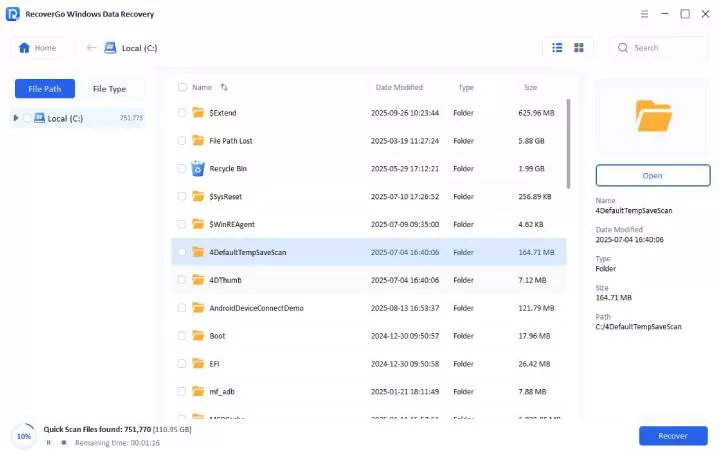
Step 3 After recovery was completed, save the file to a different drive to avoid overwriting data.

That’s it. Your deleted Excel file is restored.
Method 2: Restore via Windows File History- Previous Versions
Windows File History allows you to restore older versions of folders and files if backups were enabled before deletion. Even if an Excel file was permanently deleted, earlier saved versions may still exist. This method works best for users who regularly back up files using Windows’ built-in tools.
Steps:
1. Go to the folder where your Excel file was originally stored.
2. Right-click on the folder and select “Properties.”

3. Click the “Previous Versions” tab.
4. Select an available version from the list.
5. Click “Restore” or “Open” to preview.

This is a safe and effective option for recovery Excel file tasks without using third-party software. This method answers how can I recover a deleted Excel file without third-party tools provided backups exist.
Method 3: Recover Files in Excel using Windows File Recovery – CMD Tool
Windows File Recovery is a free command-line tool provided by Microsoft. It is designed for advanced users who want to recover permanently deleted files using Command Prompt. While not beginner-friendly, it can successfully restore Excel files if used correctly.
Steps:
1. Install Windows File Recovery from the Microsoft Store.
2. Open as administrator.
3. Use the command: winfr source-drive: destination-drive: /regular /n *.xlsx (Replace source-drive with the letter of the drive containing your deleted files. Replace destination-drive with a different drive letter)

For deeper scans, use the extensive mode: winfr source-drive: destination-drive: /extensive /n *.xlsx
The recovered files will appear in a folder named “Recovery_[date]” on your destination drive. This method is excellent when trying to recover lost files Excel users sync online.
Part 3: Expert Tips – How to Prevent Excel Data Loss in the Future?
Preventing Excel file loss is far more efficient than attempting recovery afterward. Here are expert strategies to protect your Excel files.
1. Set AutoRecover Frequency in Excel
Excel has a built-in AutoRecover feature that automatically saves your work. By default, it saves every 10 minutes, which means you could lose up to 10 minutes of work if Excel crashes. To reduce this risk, it’s recommended to change the AutoRecover time to 3 minutes.
- Click “File”, then choose “Options,” and then “Save.”
- Find “Save AutoRecover information every”
- Change it from 10 minutes to 3 minutes
- Make sure “Keep the last AutoRecovered version if I close without saving” is selected.


This simple adjustment can prevent major data loss during unexpected shutdowns.
2. Enable Cloud Syncing with OneDrive
Using OneDrive with Excel is one of the best ways to prevent lost files Excel users often face. When you save Excel files to OneDrive, they are backed up automatically. The benefits of using OneDrive with Excel are following:
- Real-time syncing with AutoSave
- Version history to restore older file versions
- Access to deleted files through OneDrive’s Recycle Bin
- File protection across multiple devices
3. Follow the 3-2-1 Backup Strategy
Moreover, the 3-2-1 backup is suggested by experienced data professionals:
- Store your data in three copies
- Backup of the store to two forms of storage
- Keep one offline (such as OneDrive or any other cloud service)
This strategy is basically making several safety nets, safeguarding hardware failures, and unintentional deletions, as well as ransomware attacks all the way through your work process. This guarantees you that you would not have problems with how to recover deleted Excel files again.
FAQs
Is it possible to retrieve an Excel file once you empty the Recycle bin?
Yes. Professional recovery programs such as RecoverGo can recover it, provided the data has not been overwritten.
Where do Excel temporary files go in Windows 11?
The Excel temporary files are normally found in: C:\Users\Username/Appdata/Local/microsoft/office/UnsavedFiles.These files may be used in recovery attempts of Excel files.
How to restore an Excel file that was deleted or hidden by a virus?
Install antivirus and then check your system with a data recovery program. RecoverGo is able to recover hidden or deleted Excel files from malware.
Is it possible to retrieve a spreadsheet that I accidentally deleted?
Yes. You may recover it from the Recycle Bin, OneDrive, File History, or recovery software depending on the situation.
Conclusion
In summary, this article focused on how to recover deleted Excel files in Windows 10/11, covering everything from quick fixes to advanced recovery solutions. Whether your file was recently deleted or permanently erased, recovery is often possible with the right approach. iToolab RecoverGo Windows Data Recovery is highly recommended, particularly following a Shift + Delete, to ensure maximum success rate. Using the right tools in time can help you get your important Excel data back safely.