

NTFS is the default file system used by Windows computers. However, accidental deletion, formatting errors, system crashes, and malware attacks can all lead to unexpected data loss.
Fortunately, NTFS data recovery is possible in many situations. Deleted files often remain on the drive until they are overwritten by new data. In this guide, you’ll learn the most effective ways to recover data from an NTFS drive and improve your chances of recovery rate.
Part 1: Why Does NTFS Data Loss Happen?
Data loss on NTFS drives can happen for many reasons. Understanding the cause can help you choose the right recovery method and avoid further damage to your files.
Some of the most common causes of NTFS data loss include:
File Deletion
Users may delete important files without realising their value. One click can erase essential information from your NTFS drive forever.
Formatting Errors
Mistakes during formatting erase all data and folders on that drive. This commonly happens when users format the wrong partition during system setup.
System Crashes
When your system crashes during file operations, it can damage your NTFS drive structure. This makes stored files invisible to the user.
Virus Attacks
Malware can silently delete or corrupt files on your NTFS drive. Infrascale reports that malware alone causes over 31% of all data loss incidents.
Power Failures
Sudden power cuts during file transfers can damage your NTFS file system. This leaves files incomplete or unreadable on your storage drive.
Can NTFS Data Be Recovered?
Yes, NTFS data can be recovered if you act quickly. When you delete a file, your system does not immediately erase it. Instead, it marks that storage space as available for new data.
This means deleted files may still exist on the drive until something replaces them. The greatest risk to recovery rate is new data overwriting the deleted data. Having the proper NTFS recovery tool gives you the highest chance of getting everything back.
Part 2: 4 Methods to Recover Data from NTFS Drive
Depending on the situation, there are several approaches to recover deleted files from NTFS. Below are four proven ways to recover data from an NTFS drive:
- Method 1: Check the Recycle Bin
- Method 2: Restore from File History
- Method 3: Recover NTFS File Using CMD
- Method 4: Use NTFS Data Recovery Software
Method 1: Check the Recycle Bin
The Recycle Bin is the first place to check after accidentally deleting any file. Windows automatically moves deleted files there before removing them permanently. This makes it the simplest form of NTFS data recovery.
Follow the steps below to restore files from the Recycle Bin:
- Open the “Recycle Bin” folder.
- Locate and right-click the file you want to recover.
- Select “Restore” from the menu.

This method is best for recently deleted files still available inside the Recycle Bin.
Method 2: Restore from File History
File History is a native Windows feature that automatically backs up your files. It saves copies of documents and important folders over different time periods. This makes it a reliable option when the Recycle Bin is empty.
Follow the steps below to restore lost files using this feature:
- Open “Control Panel” and search for “File History.” Select “Save Backup Copies of Your Files with File History” to access backup settings.
- Click “Restore Personal Files” to view available backups. Scroll through available backups and select your preferred files.
- Click “Restore” to return files to their original location.

This method only works if File History was enabled on your system beforehand.
Method 3: Recover NTFS File Using CMD
Command Prompt offers a native way to attempt file recovery. Microsoft’s Windows File Recovery tool runs through CMD and helps recover deleted NTFS files. It works best for recently deleted files before any new data overwrites the storage.
This method requires basic command-line knowledge and may feel overwhelming for beginners. Follow the instructions below:
- Open “Microsoft Store” and search for “Windows File Recovery.” Click “Install” to download it.
- Search for “Command Prompt” and select “Run as Administrator.”
- Type winfr C: D: /regular /n \Users\username\Documents\ and press Enter.
- Replace “C:” with your source drive and “D:” with your destination drive. Press “Y” to start the scan and recovery.

CMD-based recovery is free but limited, and unsuitable for permanently lost or overwritten data.
Method 4: Use NTFS Data Recovery Software – Quick and Simple
CMD and other native Windows tools cannot handle every data loss situation. Permanently deleted files, formatted drives, and corrupted NTFS partitions often require a more advanced recovery solution.
iToolab RecoverGo Windows Data Recovery provides reliable recovery with a success rate of up to 99%. It supports over 2,000 storage devices, including HDDs, SSDs, USB drives, and external hard drives. Users can recover deleted files, formatted partitions, and lost data in just three simple steps.
Key Features of RecoverGo:
- Recover permanently deleted files from NTFS drives.
- Supports recovery of 1,000+ file types from NTFS drives.
- Three scan modes help find more lost files.
- Preview all recoverable files before restoring.
How to Use RecoverGo for NTFS Data Recovery:
Step 1 Install and launch the software, then connect your NTFS drive to the computer. Click “Search for Lost Data” to start the scan.

Step 2 The tool scans the device and locates recoverable files.
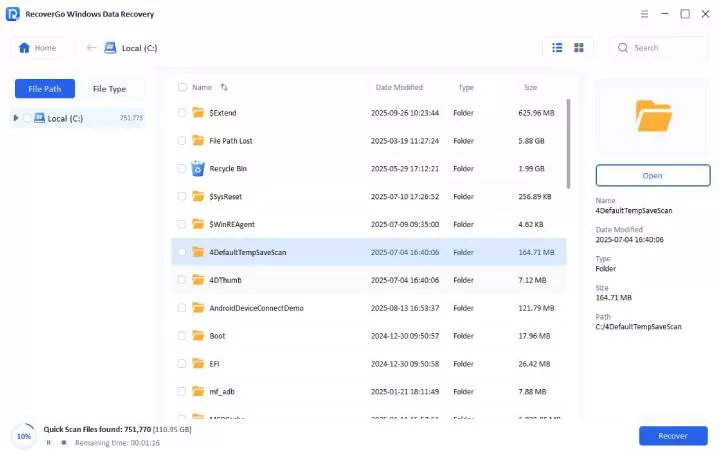
Step 3 Preview the found files to confirm they are intact. Select the files you need and click “Recover.” Choose a safe location (not the source drive) to save your recovered data.

Crucial Tips: How to Prevent NTFS Data Loss
Prevention is always smarter than dealing with NTFS file recovery afterward. Review these essential tips to protect your data:
Studies from Invenio show that 68% of all businesses recover lost data successfully through regular backups.
Final Words
Losing files from an NTFS drive does not always mean they are gone permanently. You have explored multiple methods for NTFS data recovery. Basic tools like the Recycle Bin and CMD work but only cover limited situations.
Permanently deleted files need a more dependable solution. Tools like iToolab RecoverGo Windows Data Recovery offer reliable recovery with a 99% success rate.