

Have you emptied your recycle bin by mistake and lost some valuable data on your PC? Then, this article is for you. Losing important files after emptying the Recycle Bin can truly feel like a disaster. Most people assume that once the bin is cleared, files are gone forever. How to recover items from the Recycle Bin after emptying? In most cases, deleted files can often be recovered if you act quickly.
Part 1: Is There Any Way to Recover Files After Emptying the Recycle Bin?
The answer is Yes. When you empty the Recycle Bin in Windows 10 or Windows 11, the files do not get instantly deleted. Only the visible references are removed, while the storage space is marked as available. This is why acting quickly is critical. The sooner you attempt recovery, the higher your chances of success. Remember, Recovery is still a possible reality if done within a short period. Let’s explore the easiest methods to use.
Part 2: How to Retrieve Files After Emptying Recycle Bin?
Wondering about how to restore deleted files after emptying the Recycle Bin? There are a lot of methods to select from. You can try these methods from basic Windows built-in features to advanced data recovery software.
- Method 1. Retrieve Files from File History
- Method 2. Use Windows File Recovery
- Method 3. Retrieve via Cloud Backup
- Method 4. Use File Recovery Software🔥
Method 1: Retrieve Files from File History
File History is a built-in Windows backup feature. It helps to automatically save copies of your files. You need to turn it on beforehand. Only then it can save your files before permanent deletion happens.
If you have set up File History and then empty the Recycle Bin, you can follow the steps below to restore deleted files.
- Open “File Explorer” and go to the folder that used to contain the file or folder.
- Right-click on the folder name, and then select “Restore previous versions”. If the folder was at the top level of a drive, for example, C:\, right-click the drive. Now, select the “Restore previous versions” option.
- The Previous Versions tab mentions in detail the available previous versions of the file or folder. You need to select a folder you want to restore or a previous version of the folder that contains the deleted file.
- Click on the “Open” option to expand it. Now select the “Open in File History” option. Click on “Restore” to restore the content of the selected version. To be cautious, one can avoid overwriting the current version by restoring the retrieved data to a different location. Just expand the “Restore” tab and select “Restore To.”

Method 2: Use Windows File Recovery
Windows File Recovery is a command-line tool developed by Microsoft. It’s quite powerful but not beginner-friendly. Thus, advanced users employ this tool.
How does it work?
It has no easy-to-use graphical interface; it uses commands for its work. This can make it challenging for users unfamiliar with command-line tools. You can still use it to retrieve files after emptying the Recycle Bin. Through commands, this tool scans drives, recovering lost files based on file type, location, or signature.
Follow the steps below to use Windows File Recovery
- Download “Windows File Recovery” from the Microsoft Store. This tool requires you to have installed Windows 10’s May 2020 Update or newer, or any version of Windows 11. It doesn’t run on older versions of Windows.
- Once it’s installed, open your Start menu and search for “File Recovery.” Launch the “Windows File Recovery” shortcut once and click “Yes” to the UAC (User Account Control) prompt.
- Open Command Prompt as Administrator. This is where you will run the File Recovery commands.
- Run the winfr command. Specify the drive you want to search for the deleted file and the destination you want to save it to. Ensure you save the deleted file to a different drive.
- Here’s the basic command format: winfr source-drive: destination-drive: /mode /switches
- Select the mode (Regular Mode or Extensive Mode) you want to scan for the deleted file.

Pros
- Free and powerful
- Supports multiple file systems
Cons
- Command-line interface
- Not beginner-friendly
Method 3: Retrieve via Cloud Backup
Windows 10 and Windows 11 come with built-in cloud-based backup solutions (Windows Backup app and OneDrive). It allows you to create file backups for future restoration.
Steps for OneDrive
Establish your Microsoft account first, which comes with a free 5GB OneDrive storage. Then set up your backup. Wondering how to recover deleted folder from Recycle Bin after empty? No worries! This is because you can restore lost data anytime by signing in to OneDrive with the same Microsoft account you used to make the original backup.
- Go to the OneDrive website. Sign in with either your Microsoft account or your work or school account.
- In the navigation pane, select “Recycle bin”.
- Select the deleted files.
- Click “Restore”.

Steps for Google Drive
- Open your Google Drive.
- Click the “Bin” option.
- Restore files from there.

Method 4: Use File Recovery Software🔥
If all the above methods fail, it is time for you to ask data recovery software for help. iToolab RecoverGo Windows Data Recovery is a powerful data recovery tool that help you to get files back after emptying Recycle Bin.
Key Features
- Advanced algorithms enable 99% recovery rate.
- Beginner-friendly interface help you to recover data easily.
- The software allows you to recover data in just a few steps, without requiring any command-line skills.
- Three scan modes ensure in-depth searching for your lost files.
- Select a specific location, or scan the entire disk.
How to Use iToolab RecoverGo Windows Data Recovery
Step 1 Select a Location where your files were lost and then click the “Search for Lost Data” button.

Step 2 After the scan is complete, you can find the deleted files via the file path or file type name.
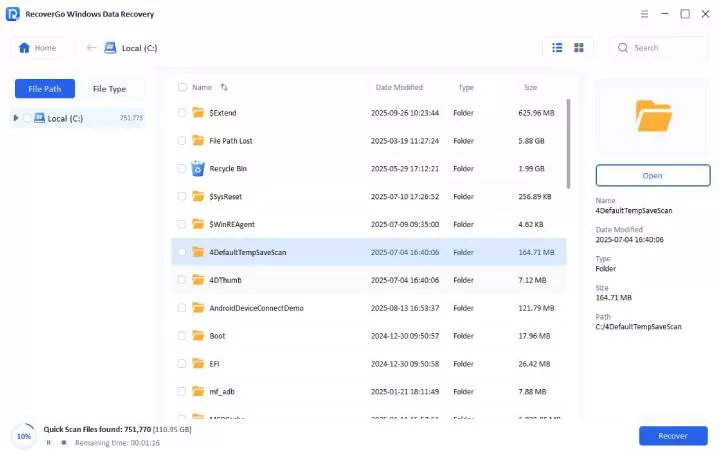
Step 3 Click the “Preview” button after finding the deleted files, and choose the “Recover” button to recover them.

Bonus Tip to Improve Recovery Success Rate
Follow these essential tips to improve your chances of recovering files after emptying the Recycle Bin:
- Stop Using the Drive: If you delete a file, avoid saving new files to prevent overwriting deleted data.
- Use Recovery Tools Instantly: The sooner you attempt recovery, the higher the success rate.
- Avoid Installing Software on the Same Drive : Install recovery tools on a different partition or external drive.
- Enable Backup Systems: Turn on File History or cloud sync to prevent future loss.
In Conclusion
Accidentally emptied your Recycle Bin and lost important files? Don’t panic. There are several reliable ways to recover deleted files. You can start with built-in Windows features, or use professional data recovery tools for deeper scanning.
Among them, iToolab RecoverGo Windows Data Recovery stands out as a reliable option, especially when no backup is available. The software is designed to recover files lost after emptying the Recycle Bin, offering a high recovery success rate (up to 99%) and three scan modes to find more recoverable data.