

ZIP files are convenient for saving and sharing big batches of data. But what do you do when those files go missing or become damaged?
Users like you have asked these questions many times over on the internet. Luckily, ZIP file recovery is possible in most cases.
In this complete guide, we will cover every method you’ll need to recover or repair ZIP files on Windows. We’ll walk you through the easiest methods first, then move to more advanced solutions.
Part 1: Why Do ZIP Files Get Lost or Corrupted?
ZIP files can become lost or corrupted due to various reasons. Identifying the reason behind corruption allows you to choose an appropriate solution.
Virus or Malware Infection
Viruses and malware can encrypt, delete or corrupt ZIP files without notice. If your computer is infected, your files are vulnerable to corruption.
Improper Downloading
Unfinished downloads usually lead to incomplete or corrupted ZIP files. This is one of the most common reasons ZIP files become corrupted.
File System Errors
Physical failures to your hard drive or sudden loss of power can cause damage to your file system. ZIP archives saved on damaged areas are likely to become corrupted or lost.
Part 2: How to Recover Deleted ZIP Files on PC?
Here are four ways to recover deleted ZIP files on Windows PC. Try each method in order, starting from easiest to most advanced:
- Method 1: Recover ZIP Files from Recycle Bin
- Method 2: Restore Previous Versions
- Method 3: Use ZIP File Recovery Software – Fast and Simple
- Method 4: ZIP File Recovery Free
Method 1: Recover ZIP Files from Recycle Bin
Every time you delete a file in Windows, it goes into the Recycle Bin first. This is the easiest method to try.
Steps to Recover Zip Files from Recycle Bin:
- Right-click the Recycle Bin icon on your desktop and click Open.
- Type your ZIP file name into the search bar in the top-right corner.
- Right-click the ZIP file and select Restore. The file now be restored to its original location.

Fast, easy, and doesn’t cost a thing. Only works if you haven’t emptied your Recycle Bin.
Also Read: How to Retrieve Files After Emptying Recycle Bin Windows 10/11
Method 2: Restore Previous Versions
Windows frequently creates automatic backups of your files with File History. You can use this feature to recover deleted or overwritten ZIP files.
Restore Previous Versions Steps:
- Open the folder where your ZIP file was originally located.
- Right-click inside the folder (but not on a file), select Properties.
- Click on the Previous Versions tab.
- Select a version from before the ZIP file was deleted.
- Click Restore.

This methods works great if you have File History turned on or a restore point created. If you’ve never used File History or Backup and Restore, you’ll see an empty tab.
Method 3: Use Zip File Recovery Software – Fast and Simple
If neither of the above methods work for you, the next best method is ZIP file recovery software. We recommend iToolab RecoverGo Windows Data Recovery. It’s easy to use—there aren’t any commands to remember! RecoverGo can recover permanently deleted files, including files deleted using Shift+Delete.
Key Features:
- This software uses a graphical interface.
- Easily locate lost files with built-in search and filtering tools.
- Recover your data in a few steps.
- Advanced algorithms ensure a 99% recovery rate.
- Three scan modes help your find more lost data.
How to Recover Deleted ZIP Files with RecoverGo:
Step 1 Choose the drive or folder where your ZIP files were lost, then click the “Search for Lost Data” button.

Step 2 This tool starts scanning. The scan time depends on your drive and data.
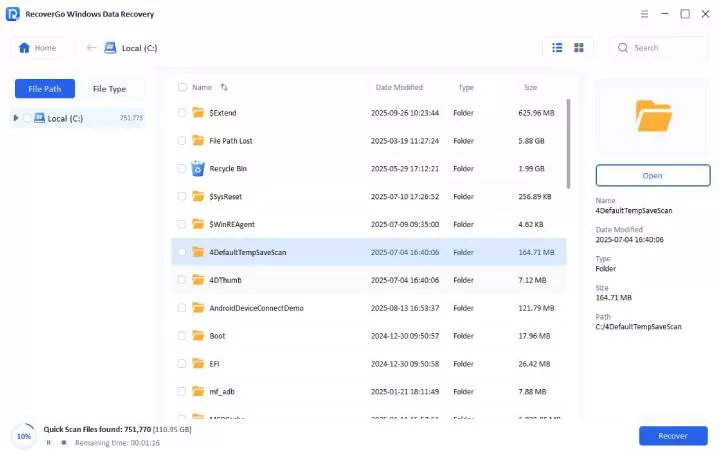
Step 3 Click Recover and choose a new location to save your recovered files. Make sure to save to a different drive!

Method 4: ZIP File Recovery Free
Windows File Recovery is a free command-line tool provided by Microsoft. You can download it from the Microsoft Store on Windows 10 and Windows 11 PCs.
ZIP File Recovery Steps:
- Install Windows File Recovery.
- Launch Command Prompt as administrator.
- Enter the following command and press Enter:
winfr C: D:\RecoveryFolder /extensive /n *.zip
Replace C: with the drive letter you want to scan for lost ZIP files. Replace D:\RecoveryFolder with the folder you want to recover files to.
- Make sure you point recovery files to a folder on a different drive! Once you hit Enter, allow Windows File Recovery to complete the scan.
- Check the folder you chose for recovered ZIP files.

Pros
- Completely free.
- Made by Microsoft.
- Can recover deleted files from formatted drives.
Cons
- Uses commands (command-line program).
- Extremely slow when scanning large drives.
- Can’t preview files before recovery.
Windows File Recovery is a good free tool but has a steep learning curve. Only use this if you know your way around commands. For beginner, we recommend to use RecoverGo.
Part 3: How to Repair Corrupted ZIP Files?
Note that a corrupted ZIP file is not the same as a deleted one. The ZIP file is still there on your drive; it just will not open. Fortunately, these tricks can repair the file’s internal structure and allow you to recover your files.
- Method 1: Rename the File Extension
- Method 2: Repair with ZIP Command Line
- Method 3: Use WinRAR to Repair
Method 1: Rename the File Extension
Occasionally, a ZIP file seems corrupted when it only has the wrong extension. Simply renaming it can fix the issue.
Steps to Rename the File Extension:
- Right-click on the file and click Rename.
- Type .zip instead of whatever extension is currently there (.zip, .tmp, or nothing at all).
- Hit Enter and attempt to open it again.

Method 2: Repair Corrupted File with ZIP Command Line
Windows includes a command line tool to verify and repair ZIP files.
Steps to Use ZIP Command Line:
- Hit Windows + R, type cmd and hit Enter. Use the cd command to navigate to the directory containing your ZIP file.
- Type: zip -FF yourfile.zip –out fixedfile.zip and hit Enter.
- Wait for Windows to finish. Try opening fixedfile.zip.

Method 3: Use WinRAR to Repair Corrupted Files
WinRAR features a repair utility that works on ZIP files. It is extremely effective, so if you have WinRAR installed give this method a try.
Steps to Repair Corrupted Files:
- Right-click on the corrupted ZIP file. Select Open with WinRAR.
- Click on the Tools menu at the top of the window and click Repair archive.
- Select a destination folder to save the repaired file. Hit OK and let WinRAR work its magic.
- Navigate to your chosen destination folder and open the repaired file.

Bonus Tips to Improve Zip Files Recovery Rate
Follow these tips to maximize your chances of successful ZIP file recovery:
Stop using the drive immediately
Any new data saved to the drive could overwrite your ZIP file. Stop using the affected drive completely until you have finished recovery.
Save recovered files to a different drive
Recovered files should never be saved to the same drive they were recovered from. If you need to save recovered data to a USB drive, be sure to use a different one than the drive you are recovering from.
Turn on File History
Navigate to Settings – Update and Security – Backup and turn on File History. File History will now regularly back up your files, which can help prevent future data loss.
Keep your antivirus updated
You cannot get malware if your antivirus software is blocking it. Make sure you have a trusted antivirus tool installed and that it is kept up to date.
Scan your drives regularly
Tools like CrystalDiskInfo can help you check the health of your drives before they start corrupting your files.
Do not download files on sketchy Wi-Fi
This can’t reduce the chances to recover ZIP files, but it is a leading cause of ZIP file corruption. Always wait for a download to finish before opening or moving your ZIP file.
FAQs About ZIP Files Recovery
Can I recover a ZIP file after using Shift + Delete?
Yes, you can. When you use Shift + Delete to delete a file, you are skipping the Recycle Bin. However, that does not actually delete the file from your computer right away. The space that your deleted ZIP file was taking up on your drive is merely marked as available for Windows to write over. Software like iToolab RecoverGo can scan your drive and recover the file before someone actually does overwrite it.
Why are recovered ZIP files sometimes corrupted or unopenable?
If a file gets partially overwritten before you recover it, the ZIP archive will be incomplete. Since ZIP files contain multiple compressed files, they need every single piece of data in order to be opened. Losing even one block of data can render the entire file unreadable. This is why it’s important to begin recovery as soon as possible.
When you extract a ZIP file, where does it go?
Windows extracts ZIP files into the same location that they are saved by default. So, if you have a ZIP file on your desktop, Windows will extract it to a new folder on the desktop. To extract somewhere else, right-click the ZIP file, select Extract All, then browse to a new location and click Extract.
Final Words
Deleted ZIP files are not the end of the world. First check the Recycle Bin and try using Previous Versions if available. If those don’t work, try recovery software like iToolab RecoverGo Windows Data Recovery for a reliable solution with a 99% recovery rate.
When all else fails and you are met with corruption, WinRAR has one of the best repair tool available for free. Remember to act quickly and stop using the affected drive immediately to maximize your recovery chances.